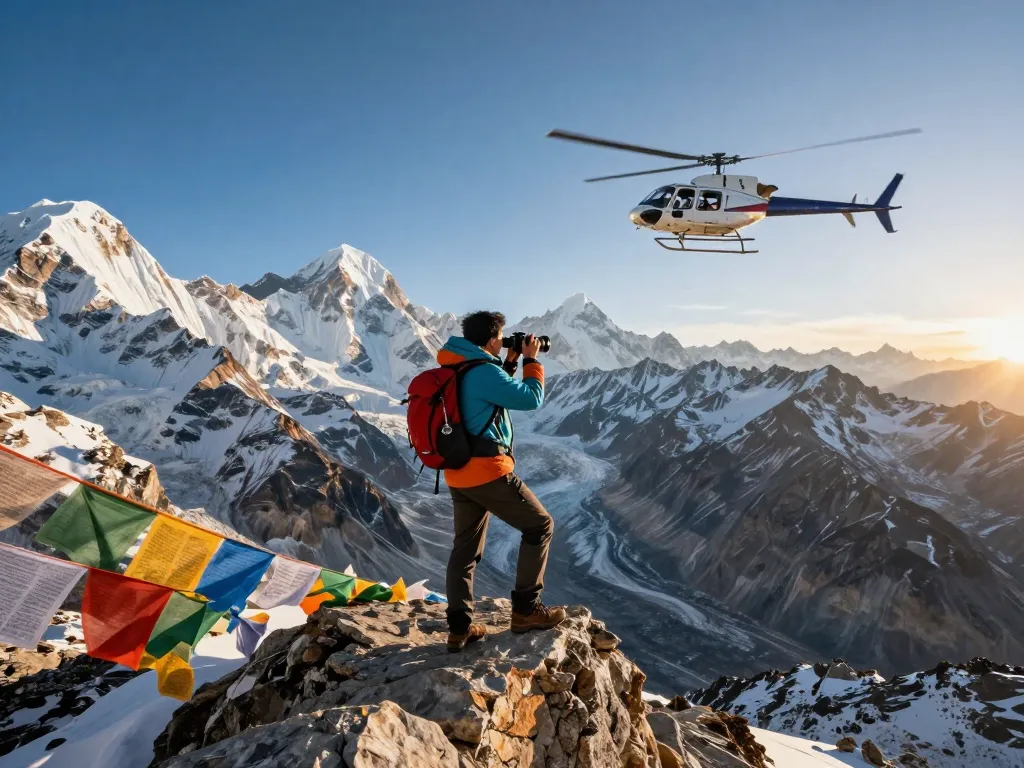
Overview of the Everest Base Camp Heli Trek
The Everest Base Camp Heli Trek is an extraordinary adventure that allows trekkers to experience the magnificence of the Himalayas while enjoying the conveniences of modern travel. Combining a moderately challenging trek with a breathtaking helicopter ride back, this expedition is ideal for those seeking both adventure and comfort. This unique trek offers a chance to explore iconic landscapes, interact with vibrant cultures, and return with unforgettable memories.
What is the Everest Base Camp Heli Trek?
The Everest Base Camp Heli Trek begins with a flight to Lukla, one of the most thrilling airports in the world, followed by a trek that takes you through the heart of the Khumbu region. Over a span of approximately 10-14 days, trekkers will ascend to Base Camp at 5,364 meters, explore stunning viewpoints like Kala Patthar, and then enjoy a scenic helicopter flight back to Kathmandu. This trek is not only a physical challenge but also a cultural journey through the homeland of the Sherpa people.
Key Highlights of the Trek
- Stunning views of Mount Everest, Lhotse, and Nuptse.
- Visit traditional Sherpa villages and experience their unique culture.
- Acclimatization days designed to help you adjust to the altitude.
- Helicopter ride providing breathtaking aerial views of the Himalayas.
- Opportunity to trek through lush forests, high-altitude deserts, and glacial rivers.
Why Choose a Helicopter Return?
Choosing a helicopter return on your trek to Everest Base Camp offers several advantages. It significantly reduces travel time, allowing trekkers to avoid the physically demanding descent. Additionally, the helicopter ride provides a unique perspective of the towering peaks and stunning landscapes, creating lasting memories and fantastic photo opportunities. This option is particularly appealing for those with time constraints or those seeking a more luxurious experience.
Preparing for Your Trek
Essential Gear and Equipment
Proper preparation is crucial for a successful trek. Essential gear includes high-quality trekking boots, layered clothing to accommodate fluctuating temperatures, a warm sleeping bag, and a durable backpack. Don't forget trekking poles, a first-aid kit, and hydration systems. Investing in good gear not only enhances comfort but also ensures safety in challenging conditions.
Physical Preparation and Fitness
A good level of fitness is essential for tackling the Everest Base Camp Heli Trek. Trekkers should engage in cardiovascular activities like walking, running, or cycling for at least 3-4 months prior to departure. Incorporating strength training, particularly for the legs and core, can also be beneficial. Gradually increasing the intensity and duration of your workouts will prepare your body for the rigors of high-altitude trekking.
Understanding Altitude Sickness
Altitude sickness is a significant concern when trekking to high elevations. It can affect anyone, regardless of fitness level or experience. Symptoms may include headache, nausea, and fatigue. To mitigate these risks, it's important to acclimatize properly—this means ascending slowly and allowing time for your body to adjust. Carrying medications such as acetazolamide can also help alleviate symptoms.
Cost and Logistics of the Everest Base Camp Heli Trek
Estimated Costs for 2026
The cost of the Everest Base Camp Heli Trek varies based on various factors including the trekking company, the level of service, and group size. On average, prices range from $2,000 to $5,000 per person in 2026, which includes permits, accommodations, food, and the helicopter return. It's essential to research various packages to find the best fit for your budget and expectations.
Booking and Itinerary Planning
When planning your trek, it's advisable to book through a reputable trekking company that offers comprehensive packages. Ensure that the itinerary allows for proper acclimatization and includes cultural experiences, guides, and support staff. Most itineraries typically span 10 to 14 days, balancing trekking with periods for rest and exploration.
Insurance and Safety Considerations
Travel insurance is a must for any trek in the Himalayas. Look for a policy that covers emergency evacuation, trip cancellation, and medical expenses. Safety should always be a priority, so choose a trekking operator with a good reputation for safety standards and emergency preparedness.
Experiencing the Journey: What to Expect
Daily Trekking Schedule and Activities
Your daily schedule on the Everest Base Camp Heli Trek will be filled with exploration and breathtaking views. A typical day starts early with a hearty breakfast, followed by several hours of trekking, culminating in stops at scenic viewpoints or cultural sites. Most days involve 6-8 hours of walking, allowing ample time to soak in the stunning landscapes and local culture.
Cultural Insights Along the Trail
As you trek towards Base Camp, you'll pass through several Sherpa villages, each offering a glimpse into the rich culture of the region. Interacting with local families, visiting monasteries, and participating in traditional festivals can enhance your experience significantly. Embrace opportunities to learn about the unique customs and traditions that define life in the Himalayas.
Photography Tips for Stunning Shots
Capturing the beauty of the Everest region is a must. To take the best photos, consider investing in a good camera and learning about composition and lighting. The golden hours—early morning and late afternoon—provide the best natural light. Additionally, be respectful of locals when taking photos, always asking permission when capturing people in your shots.
Future Trends and Developments in Trekking
Emerging Technologies for Heli Treks
With advancements in technology, trekking experiences are evolving rapidly. Drones for photography, mobile apps for navigation, and enhanced gear designs are becoming commonplace. The use of real-time weather monitoring systems can also improve safety and decision-making during treks, allowing for a more enjoyable experience.
Sustainable Tourism Practices in Nepal
As trekking becomes more popular, the importance of sustainable tourism practices cannot be overstated. Many trekking companies are now implementing eco-friendly strategies designed to minimize environmental impact, such as using biodegradable products and encouraging waste reduction. Supporting local economies through responsible tourism is essential for preserving the natural beauty and culture of the region.
Predictions for Trekking Experiences Beyond 2026
Looking ahead, the trekking industry in Nepal will likely continue to innovate, with a greater emphasis on premium experiences, personalized itineraries, and holistic health approaches. As the demand for unique and sustainable travel experiences grows, trekkers can expect to see more customized tours that cater to individual preferences while ensuring the preservation of Nepal's incredible landscapes and culture.
What is the cost of the Everest Base Camp Heli Trek?
Costs for the Everest Base Camp Heli Trek can vary greatly depending on numerous factors such as the season, trekking company, and level of luxury. Generally, expect to pay between $2,000 and $5,000, which covers permits, accommodation, meals, and the helicopter return. Researching different packages can help you find one that aligns with your budget and needs.
How physically fit do I need to be for the trek?
A moderate level of fitness is recommended for the Everest Base Camp Heli Trek. Regular cardio and strength training in the months leading up to your trip will greatly enhance your ability to enjoy the trek. Focus on endurance-building exercises that mimic the physical demands of trekking in high-altitude conditions.
What is the best time of year for the Everest Base Camp Heli Trek?
The best times to undertake the Everest Base Camp Heli Trek are during the spring (March to May) and autumn (September to November) when the weather is generally stable and the views are breathtaking. These periods offer the clearest skies and the most pleasant temperatures, making your trekking experience even more enjoyable.
How does the helicopter return work?
The helicopter return entails a scenic flight from Base Camp directly back to Kathmandu or Lukla, depending on your itinerary. This service is typically booked in advance and may require a private charter for larger groups. Be sure to allocate enough flexibility in your schedule to accommodate weather conditions that could affect flight availability.
What cultural experiences can I expect on the trek?
Throughout the trek, expect to encounter various aspects of Sherpa culture. You may visit ancient monasteries, witness local festivals, and interact with the warm, hospitable communities. These experiences enrich your journey by providing insight into the daily lives and traditions of those who call the Himalayas home.